They are ill discoverers that think there is no land, when they can see nothing but the sea.
- Sir Francis Bacon.
Showing posts with label It's Up to You. Show all posts

Wednesday, September 10, 2008

für den Kaiserin Elisabeth
(Pequeño Vals Vienés...)


Kaiserin Sissi


Πριν απο ακριβώς 110 χρόνια - στις 10 Σεπτεμβρίου 1898 - έσβησε ένα απο τα σπάνια έντελβαις που καταδέχτηκαν να κοσμήσουν αυτόν τον χυδαίο και ασήμαντο κόσμο.

Η Elisabeth Amalie Eugenie von Wittelsbach ήταν, ως σύζυγος του Φραγκίσκου Ιωσήφ, αυτοκράτειρα της Αυστρίας, Βασίλισσα της Ουγγαρίας, της Βοημίας, της Δαλματίας, της Ιλλυρίας... ( ακολουθούν κάμποσα βασίλεια, δουκάτα, βοϊβοδίες)... κλπ. κλπ. - και τα ρέστα τελοσπάντων παγωτό.

Πιο σημαντικά όμως, ήταν ένας άνθρωπος που ζούσε για την ομορφιά. Κυνήγησε την ομορφιά. Στον εαυτό της και τους άλλους.

Ήταν δυστυχισμένη.

Γιατί η ομορφιά έχει συνάμα και κάτι το απόκοσμο. Και το απάνθρωπο.

Και δεν έχει παρα δύο δρόμους να ακολουθήσει: σαν τα βιβλικά μαργαριτάρια να πέσει στα γουρούνια ή να αποξενωθεί και να τρελαθεί.

Οδηγήθηκε και στα δύο μονοπάτια (είναι να μην τρελαθείς μετά; )

Στο τέλος η μοίρα της την έφερε θύμα μιας τυχαίας πολιτικής δολοφονίας.

Έβλεπες τον εαυτό σου ως Τιτάνια.

Ερωτεύτηκες τον Μπότομ όταν η θέση σου είναι με τον Όμπερον.

Για σένα.

Γιατί ντράπηκα να αφήσω λουλούδια.


Now in Vienna...


there's ten pretty women


There's a shoulder where Death comes to cry


There's a lobby with nine hundred windows


There's a tree where the doves go to die


There's a piece that was torn from the morning
And it hangs in the Gallery of Frost


¡Ay, ay, ay, ay!
Take this waltz, take this waltz
Take this waltz with the clamp on its jaws


Oh I want you, I want you, I want you
On a chair with a dead magazine
In the cave at the tip of the lily

In some hallways where love's never been


On a bed where the moon has been sweating
In a cry filled with footsteps and sand

¡Ay, ay, ay, ay!
Take this waltz, take this waltz
Take its broken waist in your hand

This waltz, this waltz, this waltz, this waltz
With its very own breath of brandy and Death
Dragging its tail in the sea

There's a concert hall in Vienna
Where your mouth had a thousand reviews
There's a bar where the boys have stopped talking
They've been sentenced to death by the blues

Πένθος στη Musikverein

Ah, but who is it climbs to your picture
With a garland of freshly cut tears?

¡Ay, ay, ay, ay!
Take this waltz, take this waltz
Take this waltz it's been dying for years

There's an attic where children are playing

Where I've got to lie down with you soon

In a dream of Hungarian lanterns


In the mist of some sweet afternoon


And I'll see what you've chained to your sorrow
All your sheep and your lilies of snow


¡Ay, ay, ay, ay!
Take this waltz, take this waltz
With its "I'll never forget you, you know!"

This waltz, this waltz, this waltz, this waltz ...

And I'll dance with you in Vienna
I'll be wearing a river's disguise
The hyacinth wild on my shoulder,
My mouth on the dew of your thighs


And I'll bury my soul in a scrapbook,
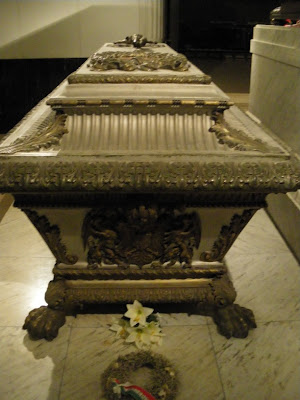
There she rests


With the photographs there, and the moss
And I'll yield to the flood of your beauty
My cheap violin and my cross


And you'll carry me down on your dancing
To the pools that you lift on your wrist


Oh my love, Oh my love


Take this waltz, take this waltz
It's yours now. It's all that there is...

Μνημειώδης μεταφορά σε τραγούδι - απο τον μεγάλο Leonard Cohen - του Pequeño Vals Vienés του Federico García Lorca :


En Viena hay diez muchachas,
un hombro donde solloza la muerte
y un bosque de palomas disecadas.
Hay un fragmento de la mañana
en el museo de la escarcha.
Hay un salón con mil ventanas.

¡Ay, ay, ay, ay!
Toma este vals con la boca cerrada.

Este vals, este vals, este vals, este vals,
de sí, de muerte y de coñac
que moja su cola en el mar.

Te quiero, te quiero, te quiero,
con la butaca y el libro muerto,
por el melancólico pasillo,
en el oscuro desván del lirio,
en nuestra cama de la luna
y en la danza que sueña la tortuga.

¡Ay, ay, ay, ay!
Toma este vals de quebrada cintura.

En Viena hay cuatro espejos
donde juegan tu boca y los ecos.
Hay una muerte para piano
que pinta de azul a los muchachos.
Hay mendigos por los tejados,
hay frescas guirnaldas de llanto.

¡Ay, ay, ay, ay!
Toma este vals que se muere en mis brazos.

Porque te quiero, te quiero, amor mío,
en el desván donde juegan los niños,
soñando viejas luces de Hungría
por los rumores de la tarde tibia,
viendo ovejas y lirios de nieve
por el silencio oscuro de tu frente.

¡Ay, ay, ay, ay!
Toma este vals, este vals del "Te quiero siempre".

En Viena bailaré contigo
con un disfraz que tenga
cabeza de río.
¡Mira qué orillas tengo de jacintos!
Dejaré mi boca entre tus piernas,
mi alma en fotografías y azucenas,
y en las ondas oscuras de tu andar
quiero, amor mío, amor mío, dejar,
violín y sepulcro, las cintas del vals.


PS: All pictures, except those of Tiziano's painting and Elisabeth's portrait, by me.


.

Friday, May 2, 2008

The Weeping Song

The long tradition of May Day sadness holds fast.

For the occasion, nothing less than probably the best modern rock song ever written, a duet of Nick Cave and Blixa Bargeld in the vocals:

The Weeping Song
from The Good Son album by Nick Cave and The Bad Seeds,


Go son, go down to the water
And see the women weeping there
Then go up into the mountains
The men, they all are weeping too

Father, why are all the women weeping?
They are weeping for their men
Then why are all the men there weeping?
They are weeping back at them

This is a weeping song
A song in which to weep
While all the men and women sleep
This is a weeping song
But I won't be weeping long

Father, why are all the children weeping?
They are merely crying son
O, are they merely crying, father?
Yes, true weeping is yet to come

This is a weeping song
A song in which to weep
While all the men and women sleep
This is a weeping song
But I won't be weeping long

O father tell me, are you weeping?
Your face seems wet to touch
O then I'm so sorry, father
I never thought I hurt you so much

This is a weeping song
A song in which to weep
While we rock ourselves to sleep
This is a weeping song
But I won't be weeping long


But I won't be weeping long...

I wish I could say the same.

Saturday, March 15, 2008

Cave Idus Martiae! - Cäsars Tod


Beware the Ides of March! (March 15)

For all those who have set their minds on greatness and lofty goals, let this day be a warning! Treason is never away from people's minds.

Betrayal can lurk behind any corner and traitors... well... we see them in our everyday lives aplenty.

Tyranny on the other hand,as history has shown, is never tolerated. Another warning to those who tread on others to reach their lofty goals.


From the opera "Der Silbersee,ein Wintermärchen" (The Silver lake, a winter's tale) by the great Kurt Weill (libretto by Georg Kaiser):


Cäsars Tod

Rom war eine Stadt, und alle Römer
hatten in den Adern heißes Blut.
Als sie Cäsar einst tyrannisch reizte,
kochte es sofort in Siedeglut.

Nicht die Warnung konnte Cäsar hindern:
"Hüte vor des Märzes Iden dich!"
Er verfolgte seine frechen Ziele
und sah schon als Herrn der Römer sich.

Immer schlimmer schlug ihn die Verblendung,
nur sein Wort galt noch im Capitol.
Und den weisen Rat der Senatoren
schmähte er gemein und höhnisch Kohl.

Da kam stolzes Römerblut ins Wallen.
Selbst der Freund bleibt keinem Cäsar treu,
wenn ihn dieser nur für seine Zwecke
kalt mißbraucht und sagt es ohne Scheu.

Heimlich trafen nachts sich die Verschwörer
und beredeten voll Eifer sich.
Und genau am Tag der Märzesiden
gab ihm Brutus den verdienten Stich.

Cäsar sank von seinem Sitz und stierte
seinen Mörder an, als ob’s nicht wahr.
"Et tu, Brute?" — rief er auf lateinisch,
wie es dort die Landessprache war.

Lasse keiner sich vom Wahn verführen,
daß er mehr als jeder and’re gelt:

Cäsar wollte mit dem Schwert regieren

und ein Messer hat ihn selbst gefällt
.

(Once there was a city called Rome, and all the Romans
had hot blood in their veins.
And when Caesar provoked them with tyranny
it roared immediately with boiling-heat.

The warning could not hinder Caesar
"Beware the Ides of March!"
He pursued his brazen goals
already seeing himself as lord of the Romans.

His blindness grew worse and worse
his word alone counted in the Capitol.
And the wise counsel of the Senators
he would sneer at and treat as rot.

Then the proud Roman blood came to the boil
no friends remain loyal to Caesar
when he coldly misuses them for his own purposes
and shamelessly says so.

The conspirators met secretly at night
and plotted full of eagerness
And exactly on the day of the Ides of March
Brutus gave him the stab he deserved

Caesar sank from his seat and stared
at his murderers as if it weren't real
"Et tu, Brute?" he said in latin
as was the language of that place

Let no one be led by delusions
that he counts more than anyone else:

Caesar wanted to rule with the sword

and it was a knife that struck him down
.)

Sic semper tyrannis, gentlemen... the line that divides greatness from tyranny is a very fine one. As is the line that divides betrayal from self-determination....


PS I: "Der Silbersee,ein Wintermärchen" premiered 10 days before the burning of the Reichstag in 1933. It was a brave move by Kurt Weill and Georg Kaiser to stage an opera directly attacking tyranny while Nazism was on the rise.

PS II: Though less dramatic, it is the everyday betrayals that we usually face. And they hurt every bit as much because they remind us of the many ways life has to make us be untrue even to ourselves.
For Rafael...


.

Saturday, February 23, 2008

The colour of a fallen angel


Few things are as sad as the sight of the remnants of snow.

How that powdery white blanket of pristine dazzling beauty vanishes, leaving behind, where the heavier drifts had been, a slowly melting crystallized mass of dirty ice surrounded by black sludge.


Like the plumage of an angel that has fallen from grace...


Tuesday, February 12, 2008

Love will tear us apart


This morning, with the weather as a perfect backdrop, I saw Control, the film about Ian Curtis. A stunningly dark film that catches the mood underlying the music of the Manchester scene. Ian Curtis was the singer for Joy Division.

This was their most succesfull song. Apart from a wonderful rhythm and melody, apparently people saw the truth in it.

Now, I see it too.

(His tombstone, in Macclesfield Cemetery. The words on it are chosen by his wife Deborah..)

LOVE WILL TEAR US APART

When routine bites hard
and ambitions are low.
And resentment rides high
but emotions won't grow.
And we're changing our ways
taking different roads.

Love, love will tear us apart again.

Why is the bedroom so cold
turned away on your side?
Is my timing that flawed
our respect run so dry?
Yet there's still this appeal
that we've kept through our lives.

Love, love will tear us apart again.

Do you cry out in your sleep,
all my failings expose?
Gets a taste in my mouth
as desperation takes hold.
Why is it something so good
just can't function no more?

Love, love will tear us apart again.
Love, love will tear us apart again...


Tony Wilson, a co-founder of Factory Records and one of the most influential people in the Manchester scene once recounted :

"I'd been warned on a train to London two weeks earlier by Annik [note: Annik Honoré, Curtis' lover]. I asked her, 'What do you think of the new album.' She goes, 'I'm terrified.' I said, 'What are you terrified of?' She replies, 'Don't you understand? He means it.' And I go, 'No, he doesn't mean it; it's art.' And guess what, he fucking meant it."
(Factory: Manchester from Joy Division to Happy Mondays. BBC documentary 2007)

Indeed. Ian Curtis knew better. Love CAN tear people apart....he commited suicide on 18 May, 1980.

Tuesday, February 5, 2008

Der Panther

After the neo-greek interlude, we return to the artistic production of civilized nations: I hereby post Rainer Maria Rilke's famous poem Der Panther along with my attempt at translation.


Der Panther

Im Jardin des Plantes, Paris

Sein Blick ist vom Vorübergehn der Stäbe
so müd geworden, dass er nichts mehr hält.
Ihm ist, als ob es tausend Stäbe gäbe
und hinter tausend Stäben keine Welt.

Der weiche Gang geschmeidig starker Schritte,
der sich im allerkleinsten Kreise dreht,
ist wie ein Tanz von Kraft um eine Mitte,
in der betäubt ein großer Wille steht.

Nur manchmal schiebt der Vorhang der Pupille
sich lautlos auf -. Dann geht ein Bild hinein,
geht durch der Glieder angespannte Stille -
und hört im Herzen auf zu sein.


6.11.1902, Paris

The Panther

At the Jardin des Plantes, Paris

His gaze,from pacing behind the bars that stand before him
has grown so exhausted that there's nothing it can hold
It seems to him as if there are a thousand bars before him
and beyond these thousand bars no world.


The soft footfalls, the supple muscular canter
that goes about in ever-smaller turns
is like a dance of power around a fixed center
in which, like dazed, a greater spirit burns.

And only at times the curtain that obscures the sight
silently parts -. Right then an image shoots through the eye
goes through the limbs - then strained quiet -
straight to the heart only for it to die.

(1) "fixed" in stanza 2, line 3 to be read fix-ed and not fix'd
(2) "quiet" stanza 3 line 3, noun and not adjective.
(3) Stanza 3 awkward in form and metre but read aloud it actually sounds good and retains cadence.

[Despite the fact that I faced it like Nabokov, as a predetermined failure and with annotation as deemed necessary, I think the effort is not bad, so I stick to my copyright (whatever that means on the internet) and reproduction only with mention of this source, my blog.]


EDIT 6/2/2008:

I received feedback for the poem by Brian Jones who noted that "lay before him" [stanza 1] (referring to the bars of the cage) conveyed the image of horizontal bars, instead of vertical ones. Indeed, it was an inappropriate selection, so I replaced it with "stand" as was his suggestion as well. Another correction was made as well since footfalls was "footfals".

Brian Jones keeps a treasury of the arts and lore from the past, The Beckoning. A visit there is time well spent.

Sunday, February 3, 2008

We Stand Alone

Certain recent events have made me contemplate on many things.


You see, at some point or another, one has to reflect on the fact that life is (or at least should be, I have come to believe) a road that we walk by ourselves.

Enforced good will and merrymaking, as portrayed by consumerist advertising and a protected life can lead us to have a completely befuddled perception of concepts such as loneliness, uniqueness and solitude.

Though the three concepts are, I believe, inextricably linked, they should not be used interchangeably.

Solitude derives from uniqueness. It is self awareness, this potent realisation that in the universe our individual intellects are each by itself unique, that makes us something so much more than a sack af biochemical complexities.

This of course means that we are alone. It is sad to see people striving against that. And sadder still that I sought to preach against it to wiser ears, that it is all a "misconception".

It can be lessened as a condition. When individuals become flocks and they seal their fates on the decisions of others, then their tracks on the infinite web of choices and possibilities that stretches like an ocean before us converge. Bt when courses on the ocean converge, the result is collision and tragedy. Solitary means, in the end, impossible to herd. And that is what humanity should accomplish. Never put all eggs in one basket...

"I have everywhere sought, and nowhere found, so I lift the bleeding bodkin, and thrust the grief deepest in..."

There it is, the lyrics that haunted me for the last 11 years, ever since I listened to it. The song is Ad Astra, by Arcturus. And I finally begin to see what this is all about.

This grief, the grief of solitude, the grief of travelling our cosmic path and not finding another soul to greet, this grief that makes us bleed like a bodkin, leaves an aftertaste. And that is loneliness. It can be bad. It can be really bad. But it is inevitable. Because when we let ourselves free of narrowminded concepts like mandatory companionship (however menial the person we choose to throw ourselves upon is), there is nothing around us but the vast possibilities that we know we will never be able to explore in our short lives. And that hurts.

There are wounds that bleed inside us
There are wounds we never see
They are part of our refinements
That allow a man to be

There are wounds that bleed in silence
With aristocratic grace
There are tears we keep beside them
Never seen upon a face

(Savatage, The Wake of Magellan)

Catalyst for this realisation was a conversation from the latest film by the Coen Brothers, "No Country for Old Men" that I saw recently.

The unstoppable killer Anton Chigurh faces the meek Carla Jean Moss with the sole intention of killing her, after the death of her husband who would do anything to protect her but in the end was unable to protect himself:

-You got no cause to hurt me...
-No. But I gave my word.
-You gave your word?
-To your husband.
-That don't make sense. You gave your word to my husband to kill me?
-Your husband had the opportunity to save you. Instead, he used you to try to save himself.
-Not like that. Not like you say.You don't have to do this.
-They'll always say the same thing.
-What did they say?
-They say you don't have to do this.

-You don't.
- (flips a coin) This is the best I can do. Call it.
-I knowed you was crazy when I saw you sittin' there. I knowed exactly what was in store for me.
-Call it.
-No. I ain't gonna call it.
-Call it.
-The coin don't have no say. It's just you.
-Well, I got here the same way the coin did...

Her life decided at a coin-toss and she was only pleading "You don't have to do this".
One is a sad man when one pleads others for the things one needs in one's life.
One is a sad man when one allows others to have so much say in one's life.

One must learn to walk alone. Otherwise,I have come to see, life will only be a succession of crutches that will only allow us to limp for a certain distance before they fail us. And to think that I used to be so much ashamed for the time I used auxilliary wheels for my bike...

P.S.... Guess what...